
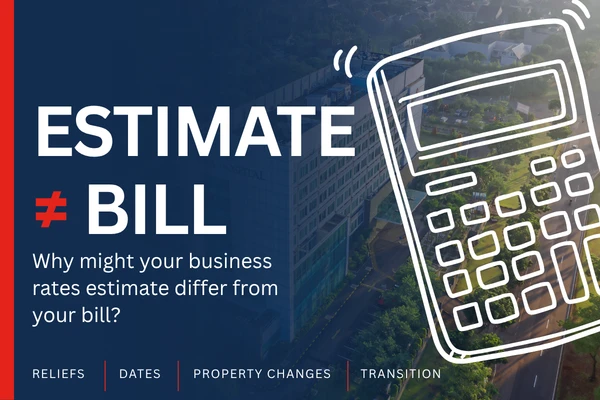
A business rates estimate is generally built from the property's rateable value and the multiplier that applies for the relevant period. Reliefs and other adjustments may then reduce or alter the amount payable.
An online calculator can process the information entered, but it cannot automatically know every fact that sits behind a council bill. The final liability can be affected by the property, the ratepayer, the dates involved and the way changes have been applied.
1. Reliefs and exemptions
A business may qualify for one or more forms of relief, but eligibility can depend on detailed criteria and can change when circumstances change. A live bill may include a relief that has not been entered into the calculator, or the estimate may assume a relief that does not apply for the whole period.
If relief appears to have been added, reduced or removed, check the effective date and the basis on which the council has made the adjustment.
2. Transitional arrangements
Following a revaluation, transitional arrangements can phase in some increases in liability rather than applying the full change immediately. These arrangements can make the figure on a bill look different from a simple rateable-value-times-multiplier calculation.
The effect is specific to the property and period, so it often needs to be checked against the detailed bill rather than inferred from a headline estimate.
3. Dates and changes in occupation
The amount payable may change when a property becomes occupied or empty, when a lease begins or ends, or when responsibility transfers between parties. A bill can also include backdated adjustments, credits or revised instalments.
Even a small difference in the dates used can produce a noticeable difference over a full year, especially for higher-value properties.
4. Changes to the property or assessment
Alterations, redevelopment, a change of use, a division or merger of space, or a revised rating assessment may affect the liability. The bill and the calculator may be using different information if a recent change has not been reflected consistently.
This is one reason to review the description and rateable value of the property, not just the amount demanded.
5. Local and historic adjustments
Depending on the location and period, a bill may contain local supplements, prior-period adjustments or other entries that are not captured by a straightforward estimate. Business rates systems also differ across the UK, so the correct approach depends on the jurisdiction.
What should you do if the figures differ?
First, check that the same rateable value, period and property circumstances have been used. Then review the bill for reliefs, credits and dated adjustments. If the reason is still unclear, a specialist review can test the assumptions and consider the property in context.
A difference is not proof of an overpayment. It is a prompt to ask the right questions. Dunlop Heywood's business rates team can carry out a detailed audit of the bill, assessment and relevant circumstances to help establish the complete position.
Compare your bill with an instant estimate here, then speak to Dunlop Heywood if you would like the figures reviewed in detail.